Showing posts with label the common man. Show all posts

Friday, September 3, 2010

Quote CXVIII

"A citizen can hardly distinguish between a tax and a fine, except that a fine is generally much lighter."

-G. K. Chesterton

Thursday, March 11, 2010

Quote No. 101


"It does not require a majority to prevail, but rather an irate, tireless minority keen to set brush fires in people's minds."


-Samuel Adams (1722-1803)

Tuesday, September 8, 2009

Quote LVI


"Democracy is two wolves and a lamb voting on what to have for lunch. Liberty is a well-armed lamb contesting the vote."

-Benjamin Franklin (1706-1790)

Quote #55: Loss of Liberty

"No people will tamely surrender their liberties, nor can any be easily subdued, when knowledge is diffused and virtue is preserved. On the contrary, when people are universally ignorant, and debauched in their manners, they will sink under their own weight without the aid of foreign invaders."

- Samuel Adams, letter to James Warren, 1775

Monday, September 7, 2009

Quote #52


"The American Republic will endure until the day congress discovers that it can bribe the public with the public's money."


-Alexis de Toucqueville (1805-1859) from Democracy in America (Vol.II)

Sunday, September 6, 2009

Quote #50


Here it is. The Fiftieth Quote. I thought this one was an appropriate reminder of what we still have in America despite everything that is going wrong today.

"Republic. I like the sound of the word. It means people can live free, talk free, go or come, buy or sell, be drunk or sober, however they choose. Some words give you a feeling. Republic is one of those words that makes me tight in the throat - the same tightness a man gets when his baby takes his first step or his first baby shaves and makes his first sound as a man. Some words can give you a feeling that makes your heart warm. Republic is one of those words."

-John Wayne as Davy Crockett in The Alamo (1960)

Saturday, September 5, 2009

Quote XLV


"Anyone who can appease a man's conscience can take his freedom away from him."


-The Cigarette Smoking Man (X-Files)

Friday, September 4, 2009

Quote XLIV


"Freedom is the sure possession of those alone who have the courage to defend it."

Pericles

Quote XLII


"History will never accept difficulties as an excuse."


-John F. Kennedy (1917-1963)

Tuesday, September 30, 2008

Quote XXII

I see in the near future a crisis approaching that unnerves me and causes me to tremble for the safety of my country. . . . Corporations have been enthroned, an era of corruption in high places will follow, and the money-power of the country will endeavor to prolong its reign by working upon the prejudices of the people until the wealth is aggregated in a few hands and the Republic is destroyed.

-Abraham Lincoln (1809-1865)

Saturday, September 27, 2008

Quote No. XX

"Prosperity is only an instrument to be used, not a deity to be worshipped." -- President Calvin Coolidge

Monday, September 15, 2008

Quote No. XVII

One of the greatest problems of our time is that many are schooled but few are educated.

-Saint Thomas More

Monday, September 1, 2008

Quote No. IX


The Roman Republic fell, not because of the ambition of Caesar or Augustus, but because it had already long ceased to be in any real sense a republic at all. When the sturdy Roman plebeian, who lived by his own labor, who voted without reward according to his own convictions, and who with his fellows formed in war the terrible Roman legion, had been changed into an idle creature who craved nothing in life save the gratification of a thirst for vapid excitement, who was fed by the state, and who directly or indirectly sold his vote to the highest bidder, then the end of the republic was at hand, and nothing could save it. The laws were the same as they had been, but the people behind the laws had changed, and so the laws counted for nothing.
-Theodore Roosevelt (1858-1919)

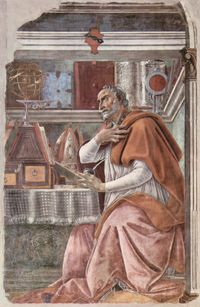
St. Augustine (by Sandro Botticelli)

St. Ignatius Loyola (by Francisco Zurbaran)

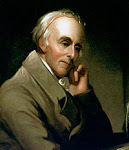
Benjamin Rush (by Charles Willson Peale)

Patrick Henry at the Virginia House of Burgesses (by Henry Rothermel)

Edmund Burke (by Sir Joshua Reynolds)

Samuel Adams (by John Singleton Copley)

Alexander Hamilton (by John Trumbull)