Showing posts with label human nature. Show all posts

Tuesday, April 29, 2014

Quote #157: Jefferson on the nature of freedom of religion

Well aware that the opinions and belief of men depend not on their own will, but follow involuntarily the evidence proposed to their minds; that Almighty God hath created the mind free, and manifested his supreme will that free it shall remain by making it altogether insusceptible of restraint; that all attempts to influence it by temporal punishments, or burthens, or by civil incapacitations, tend only to beget habits of hypocrisy and meanness, and are a departure from the plan of the holy author of our religion, who being lord both of body and mind, yet chose not to propagate it by coercions on either, as was in his Almighty power to do, but to extend it by its influence on reason alone[.] 
--  The Virginia Act for Establishing Religious Freedom (1786).

Monday, June 4, 2012

Quote #151: man as a social animal

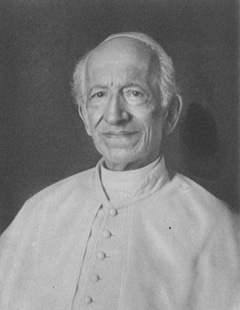
"And indeed nature, or rather God Who is the author of nature, wills that man should live in a civil society; and this clearly shown both by the faculty of language, the greatest medium of intercourse, and by numerous innate desires of the mind, and the many necessary things, and things of great importance, which men isolated cannot procure, but which they can procure when joined and associated with others."

- Pope Leo XIII, Diuturnum (On Civil Government) (1881).

Sunday, August 14, 2011

Quote #142: Natural law and the nature of government

"Good and wise men, in all ages [...] have supposed that the Deity, from the relations we stand in to Himself and to each other, has constituted an eternal and immutable law, which is indispensably obligatory upon all mankind, prior to any human institution whatever.This is what is called the law of nature, “which, being coeval with mankind, and dictated by God himself, is, of course, superior in obligations to any other. It is binding over all the globe, in all countries, and at all times. No human laws are of any validity, if contrary to this; and such of them as are valid derive all their authority, mediately or immediately, from this original.”—Blackstone.

Upon this law depend the natural rights of mankind: the Supreme Being gave existence to man, together with the means of preserving and beautifying that existence. He endowed him with rational faculties, by the help of which to discern and pursue such things as were consistent with his duty and interest; and invested him with an inviolable right to personal liberty and personal safety.
Hence, in a state of nature, no man had any moral power to deprive another of his life, limbs, property, or liberty; nor the least authority to command or exact obedience from him, except that which arose from the ties of consanguinity.

Hence, also, the origin of all civil government, justly established, must be a voluntary compact between the rulers and the ruled, and must be liable to such limitations as are necessary for the security of the absolute rights of the latter; for what original title can any man, or set of men, have to govern others, except their own consent? To usurp dominion over a people in their own despite, or to grasp at a more extensive power than they are willing to intrust, is to violate that law of nature which gives every man a right to his personal liberty, and can therefore confer no obligation to obedience.
“The principal aim of society is to protect individuals in the enjoyment of those absolute rights which were vested in them by the immutable laws of nature, but which could not be preserved in peace without that mutual assistance and intercourse which is gained by the institution of friendly and social communities. Hence it follows, that the first and primary end of human laws is to maintain and regulate these absolute rights of individuals.”—Blackstone."

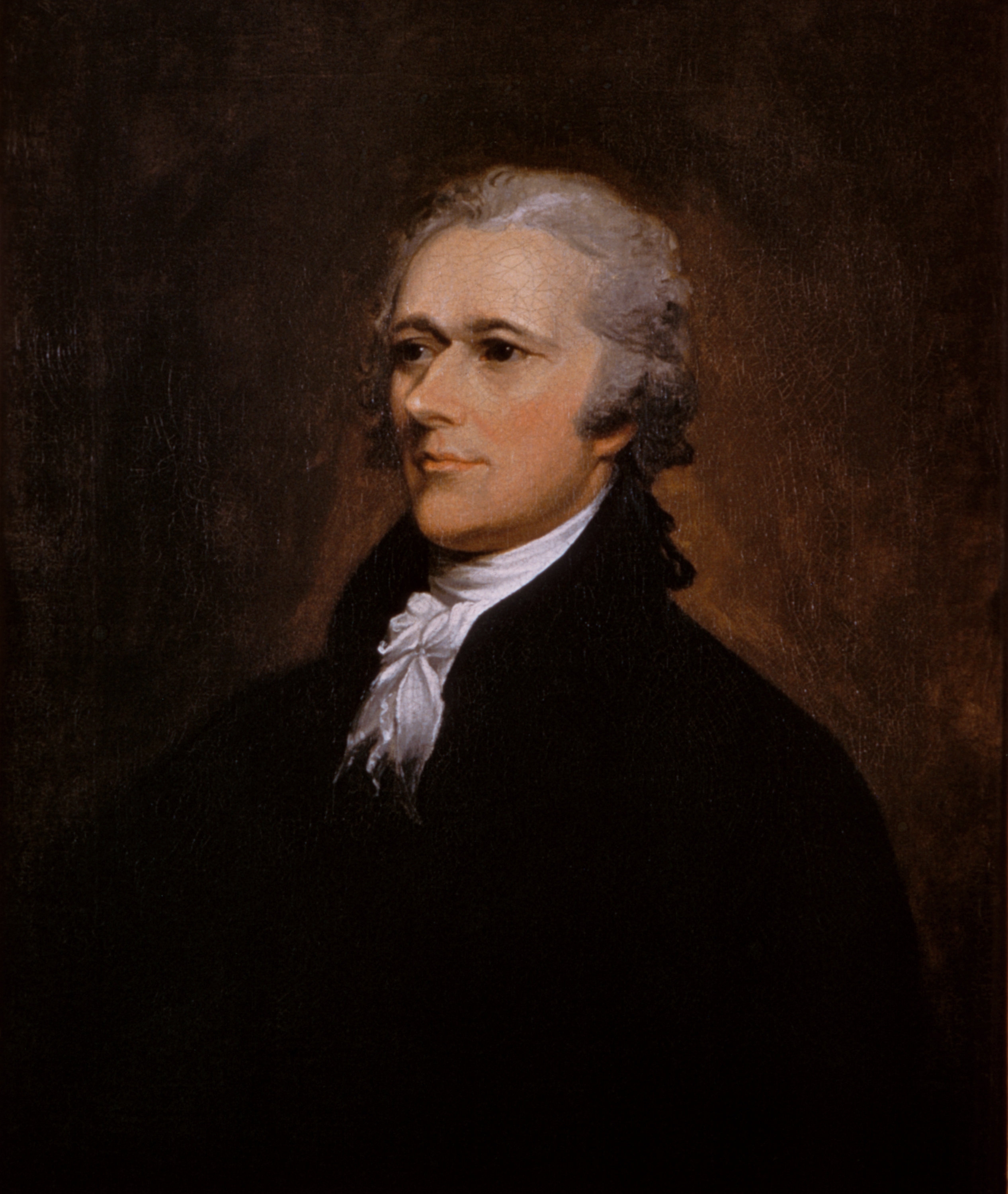
- Alexander Hamilton (1755-1804), American founding father, The Farmer Refuted (1775).

Tuesday, November 9, 2010

Quote #125: on fighting for justice

"Power never concedes anything without a demand. It never has and it never will." 


- Frederick Douglass (1808-1895), former slave, African-American civil rights activist, abolitionist and American political philosopher.

Saturday, September 4, 2010

Quote CXIX


"The truth is this: the march of Providence is so slow and our desires are so impatient; the work of progress is so immense and our means of aiding it so feeble; the life of humanity is so long and that of the individual so brief, that we often see only the ebb of the advancing wave and are thus discouraged. It is history that teaches us hope."

-General Robert E. Lee
(pictured as a young lieutenant in 1831)

Saturday, June 5, 2010

Quote #116: on persuasion


"If you would convince a man that he does wrong, do right. But do not care to convince him. Men will believe what they see. Let them see"

- Henry David Thoreau (1817-1862), American writer.

Friday, December 11, 2009

4 short quotes

  • Quote #85:  "Anxiety is the hand maiden of creativity." - T.S. Eliot (1888-1965), Anglo-American poet.
  • Quote #86:  "Wisdom is oftentimes nearer when we stoop than when we soar." - William Wordsworth (1770-1850), English poet.
  • Quote #87:  "A single conversation across the table with a wise man is better than ten years mere study of books." - Henry Wadsworth Longfellow (1807-1882), American author and linguist.
  • Quote #88:  "Man is a mixture of good and evil, and he can never be perfected in this life. The notion of his natural goodness is a delusive theory which will blow up any social order that is predicated upon it." - Richard M. Weaver (1910-1963), scholar and rhetorical theorist.

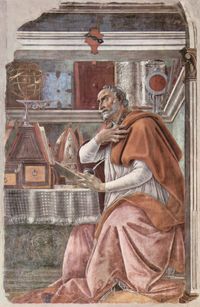
St. Augustine (by Sandro Botticelli)

St. Ignatius Loyola (by Francisco Zurbaran)

Benjamin Rush (by Charles Willson Peale)

Patrick Henry at the Virginia House of Burgesses (by Henry Rothermel)

Edmund Burke (by Sir Joshua Reynolds)

Samuel Adams (by John Singleton Copley)

Alexander Hamilton (by John Trumbull)