Showing posts with label morality in society. Show all posts

Thursday, January 5, 2012

Quote #148: the benefits of a good wife

Happy is the husband of a good wife; the number of his days will be doubled.  A loyal wife rejoices her husband, and he will complete his years in peace.  A good wife is a great blessing; she will be granted among the blessings of the man who fears the Lord.  Whether rich or poor, his heart is glad, and at all times his face is cheerful.
- Sirach 26:1-4 (Revised Standard Version, Second Catholic Edition).

Quote #147: Jefferson on the Enlightenment

[O]n the eighteen century.  It certainly witnessed the sciences and arts, manners and morals, advanced to a higher degree than the world had ever before seen.  And might we not go back to the ear of the Borgias, by which time the barbarous ages had reduced national morality to its lowest point of depravity, and observe that the arts and sciences, rising from that point, advanced gradually through all the sixteenth, seventeenth and eighteen centuries, softening and correcting the manners and morals of man?  I think, too, we may add to the great honor for science and the arts, that their natural effect is, by illuminating public opinion, to erect it into a sensor, before which the most exalted tremble for their future, as well as present fame.
- Thomas Jefferson, Letter to John Adams dated January 11, 1816, taken from In God We Trust:  The Religious Beliefs and Ideas of the American Founding Fathers, ed. by Norman Cousins (Harper & Bros.:  1958), pg. 266.

Tuesday, May 31, 2011

Quote #138: on the duty of a Christian soldier

For it was a mark of a Christian solider to combine the greatest fortitude with the greatest attention to military discipline, and to add to nobility of mind immovable fidelity towards his prince.  But, if anything dishonorable was required of him, as, for instance, to break the law of God, or to turn his sword against innocent disciples of christ, then, indeed, he refused to execute the orders, yet in such wise that he would rather retire from the army and die for his religion than oppose the public authority by means of sedition and tumult.
- Pope Leo XIII, Encyclical Letter Diuturnum (On Civil Government) (1881), chapter 20.

[Cross-posted at my own blog Ordered Liberty.]

Sunday, November 21, 2010

Quote #130: on the link between faith and works

"In one thing we agree that he who feareth God, and worketh righteousness shall be accepted of him and his Faith cannot be wrong whose life is in the right."

- Abigail Adams (1744-1818), American founder, Letter to Catherine Adams, April 15, 1818, quoted in The Founders on Religion:  A Book of Quotations, edited by James H. Hutson (Princeton:  2005), pg. 90.

Saturday, November 13, 2010

Quote #129: the problem with the religious right

"Adherents of the new religious right reject the separation of politics and religion, but they bring no spiritual insights to politics."

- Christopher Lasch (1931-1994), American historian and social critic.

Friday, November 12, 2010

Quote #128: on the need for religion in society

"The principle of liberty and equality, if coupled with mere selfishness, will make men only devils, each trying to be independent that he may fight only for his own interest. And here is the need of religion and its power, to bring in the principle of benevolence and love to men."

- John Randolph of Roanoke (1733-1833), Congressman and leader of the National Republicans Party.

Wednesday, November 10, 2010

Quote #126: on the sanctity of private property


"So great moreover is the regard of the law for private property, that it will not authorize the least violation of it; no, not even for the general good of the whole community."

- Sir William Blackstone (1723-1780), Commentary on the Laws of England.

Tuesday, November 9, 2010

Quote #125: on fighting for justice

"Power never concedes anything without a demand. It never has and it never will." 


- Frederick Douglass (1808-1895), former slave, African-American civil rights activist, abolitionist and American political philosopher.

Saturday, September 4, 2010

Quote CXIX


"The truth is this: the march of Providence is so slow and our desires are so impatient; the work of progress is so immense and our means of aiding it so feeble; the life of humanity is so long and that of the individual so brief, that we often see only the ebb of the advancing wave and are thus discouraged. It is history that teaches us hope."

-General Robert E. Lee
(pictured as a young lieutenant in 1831)

Sunday, April 11, 2010

Quote #112: don't act in a hurry

"Here is a very wise rule:  never act in a hurry, and always be ready to alter your preconceived ideas.  And here is another principle that goes with it; don't be too ready to accept the first story that is told you, or hand on to others the rumours you hear, and the secrets entrusted to you.  Find out some wise counsellor to advise you, a man of enlightened conscience, and be prepared to go by his better judgement, instead of trusting your own calculations.  Believe me, a holy life gives a man the wisdom that reflects God's will, and a wide range of experience.  The humbler he is, the more submissive in God's service, the more wise and calm will be his judgements on every question."  - The Imitation of Christ, Bk. 1, Ch. 4, Para. 2 (Ronald Knox translation).

Friday, November 20, 2009

Quote #81: on revenge

"Giving up our desire to take revenge is a hard sacrifice, perhaps the hardest, which Christ requires of us.  For our whole human nature cries out for vengence against our enemies.  The desire for revenge is stronger in our human blood than any other desire.  But - and we know it - we can no longer take revenge.  If my enemy stands there before my eyes, and I am overcome by the obsession to finally be able to take revenge, then Jesus Christ stands at once behind my enemy and entreats me:  do not lift up your hand, but leave vengence to me; I will take it."

- Dietrich Bonhoeffer (1906-1945), Christ's Love and Our Enemies (1938).

Saturday, October 3, 2009

Quote #72: "the sacred had finally overspread the world."

A great Jewish scholar meditates on what the destruction of the Second Temple meant for Jewish practice in the world:

If we appreciate the force of powerful emotions aroused by the Temple cult, we may understand how grand a revolution was effected in the simple declaration, so long in coming, that with the destruction of the Temple the realm of the sacred had finally overspread the world. We must now see in ourselves, in our selfish motives to be immolated, the noblest sacrifice of all. So Rabban Gamaliel son of Rabbi Judah the Patriarch said, "Do His will as if it was your will, so that He may do your will as if it ws His will. Make your will of no effect before His will, that He may make the will of others of no effect before your will." His will is that we love our neighbors as ourselves. Just was willingly as we would contribute bricks and mortar for the building of a sanctuary, so willingly we ought to contribute love, renunciation, self-sacrifice, for the building of a sacred community. If one wants to do something for God in a time when the Temple is no more, the offering must be the gift of selfless compassion. The holy altar must be the streets and marketplaces of the world.
- Jacob Neuser, Judaism in the Beginning of Christianity (Fortress Press: 1984), pgs. 98-99.

Sunday, September 20, 2009

Quote #66: on justice and leadership

Sage advice from the pre-Christian Jewish tradition on the need for those charged with leadership in the community to seek both justice and holiness:
Love justice, you rulers of the earth; set your mind upon the Lord in the right way, and seek him in singleness of heart; for he is to be found by those who trust him without question, and he makes himself known to those who never doubt him. Dishonest thinking cuts people off from God, and if fools like liberties with his power he shows them up for what they are. Wisdom will not enter a shifty soul, nor make her home in a body that is mortgaged to sin. This holy spirit of discipline will shun falsehood; she cannot stay in the presence of unreason, and will withdraw at the approach of injustice.
- Wisdom of Solomon 1.1-5 (circa 2nd century B.C.) (Revised English Bible translation).

Saturday, September 5, 2009

Quote XLV


"Anyone who can appease a man's conscience can take his freedom away from him."


-The Cigarette Smoking Man (X-Files)

Friday, September 4, 2009

Quote #43: on virtue in a republic


"Without morals a republic cannot subsist any length of time; they therefore who are decrying the Christian religion, whose morality is so sublime and pure(and) which insures to the good eternal happiness, are undermining the solid foundation of morals, the best security for the duration of free governments." -- Charles Carroll of Carollton, American founding father (1737-1832).

And welcome back to regular posting, Jake!

Friday, February 6, 2009

Quote #XXX

"All your schemes of an equal division of property, and for keeping all the members of a community equal in their condition, are fallacious, and, if they could be carried out, would end only in establishing universal poverty, universal ignorance, and universal barbarism." -- Orestes Brownson.

Tuesday, December 16, 2008

Quote XXVII


"I never doubted, for instance, the existence of the Deity; that He made the world, and governed it by His providence; that the most acceptable service of God was the doing good to man; that our souls are immortal; and that all crime will be punished, and virtue rewarded, either here or hereafter." -- Benjamin Franklin.

Monday, October 6, 2008

Quote No. XXIV

"You're not to be so blind with patriotism that you can't face reality. Wrong is wrong, no matter who does it or says it." -- Malcolm X

Saturday, September 27, 2008

Quote No. XX

"Prosperity is only an instrument to be used, not a deity to be worshipped." -- President Calvin Coolidge

Monday, September 15, 2008

Quote No. XVIII


I die the king's faithful servant, but God's first!


-Saint Thomas More

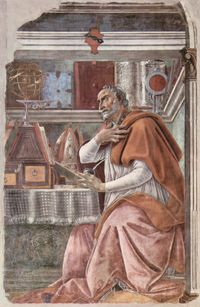
St. Augustine (by Sandro Botticelli)

St. Ignatius Loyola (by Francisco Zurbaran)

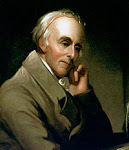
Benjamin Rush (by Charles Willson Peale)

Patrick Henry at the Virginia House of Burgesses (by Henry Rothermel)

Edmund Burke (by Sir Joshua Reynolds)

Samuel Adams (by John Singleton Copley)

Alexander Hamilton (by John Trumbull)