Showing posts with label Guarding Liberty. Show all posts

Tuesday, April 29, 2014

Quote #157: Jefferson on the nature of freedom of religion

Well aware that the opinions and belief of men depend not on their own will, but follow involuntarily the evidence proposed to their minds; that Almighty God hath created the mind free, and manifested his supreme will that free it shall remain by making it altogether insusceptible of restraint; that all attempts to influence it by temporal punishments, or burthens, or by civil incapacitations, tend only to beget habits of hypocrisy and meanness, and are a departure from the plan of the holy author of our religion, who being lord both of body and mind, yet chose not to propagate it by coercions on either, as was in his Almighty power to do, but to extend it by its influence on reason alone[.] 
--  The Virginia Act for Establishing Religious Freedom (1786).

Sunday, August 14, 2011

Quote #142: Natural law and the nature of government

"Good and wise men, in all ages [...] have supposed that the Deity, from the relations we stand in to Himself and to each other, has constituted an eternal and immutable law, which is indispensably obligatory upon all mankind, prior to any human institution whatever.This is what is called the law of nature, “which, being coeval with mankind, and dictated by God himself, is, of course, superior in obligations to any other. It is binding over all the globe, in all countries, and at all times. No human laws are of any validity, if contrary to this; and such of them as are valid derive all their authority, mediately or immediately, from this original.”—Blackstone.

Upon this law depend the natural rights of mankind: the Supreme Being gave existence to man, together with the means of preserving and beautifying that existence. He endowed him with rational faculties, by the help of which to discern and pursue such things as were consistent with his duty and interest; and invested him with an inviolable right to personal liberty and personal safety.
Hence, in a state of nature, no man had any moral power to deprive another of his life, limbs, property, or liberty; nor the least authority to command or exact obedience from him, except that which arose from the ties of consanguinity.

Hence, also, the origin of all civil government, justly established, must be a voluntary compact between the rulers and the ruled, and must be liable to such limitations as are necessary for the security of the absolute rights of the latter; for what original title can any man, or set of men, have to govern others, except their own consent? To usurp dominion over a people in their own despite, or to grasp at a more extensive power than they are willing to intrust, is to violate that law of nature which gives every man a right to his personal liberty, and can therefore confer no obligation to obedience.
“The principal aim of society is to protect individuals in the enjoyment of those absolute rights which were vested in them by the immutable laws of nature, but which could not be preserved in peace without that mutual assistance and intercourse which is gained by the institution of friendly and social communities. Hence it follows, that the first and primary end of human laws is to maintain and regulate these absolute rights of individuals.”—Blackstone."

- Alexander Hamilton (1755-1804), American founding father, The Farmer Refuted (1775).

Sunday, June 5, 2011

Quote #140: dissenting religion and the push for American Independence

From the great English statesman Edmund Burke (1729-1797) comes this analysis of the role that dissenting religion played in the American commitment to liberty at the time leading up to our Revolution:

Religion, always a principle of energy, in this new people is no way worn out or impaired; and their mode of professing it is also one main cause of this free spirit. The people are Protestants; and of that kind which is the most adverse to all implicit submission of mind and opinion. This is a persuasion not only favourable to liberty, but built upon it. I do not think, Sir, that the reason of this averseness in the dissenting churches, from all that looks like absolute government, is so much to be sought in their religious tenets, as in their history. Every one knows that the Roman Catholic religion is at least coeval with most of the governments where it prevails; that it has generally gone hand in hand with them, and received great favour and every kind of support from authority. The Church of England too was formed from her cradle under the nursing care of regular government. But the dissenting interests have sprung up in direct opposition to all the ordinary powers of the world; and could justify that opposition only on a strong claim to natural liberty. Their very existence depended on the powerful and unremitted assertion of that claim. All Protestantism, even the most cold and passive, is a sort of dissent. But the religion most prevalent in our northern colonies is a refinement on the principle of resistance; it is the dissidence of dissent, and the Protestantism of the Protestant religion. This religion, under a variety of denominations agreeing in nothing but in the communion of the spirit of liberty, is predominant in most of the northern provinces; where the Church of England, notwithstanding its legal rights, is in reality no more than a sort of private sect, not composing most probably the tenth of the people. The colonists left England when this spirit was high, and in the emigrants was the highest of all; and even that stream of foreigners, which has been constantly flowing into these colonies, has, for the greatest part, been composed of dissenters from the establishments of their several countries, and have brought with them a temper and character far from alien to that of the people with whom they mixed.
- Speech on Conciliation with the Colonies, March 22, 1775.

Thursday, June 2, 2011

Quote #139: Enduring freedom is embodied freedom

"The only freedom which can last is a freedom embodied somewhere, rooted in a history, located in space, sanctioned by a genealogy, and blessed by a religious establishment.  The only equality which abstract rights, insisted upon outside the context of politics, are likely to provide is the equality of universal slavery.  It is a lesson which Western man is only now beginning to learn."

- M.E. Bradford, A Better Guide Than Reason: Federalists & Anti-Federalists (Transaction Publishers: 1994), pg. xviii.

[Cross-posted at my own blog, Ordered Liberty.]

Thursday, November 11, 2010

Quote #127: on democracy

"As I would not be a slave, so I would not be a master. This expresses my idea of democracy."

- Abraham Lincoln (1808-1865), lawyer, politician, and first Republican president of the United States.

Wednesday, November 10, 2010

Quote #126: on the sanctity of private property


"So great moreover is the regard of the law for private property, that it will not authorize the least violation of it; no, not even for the general good of the whole community."

- Sir William Blackstone (1723-1780), Commentary on the Laws of England.

Tuesday, November 9, 2010

Quote #125: on fighting for justice

"Power never concedes anything without a demand. It never has and it never will." 


- Frederick Douglass (1808-1895), former slave, African-American civil rights activist, abolitionist and American political philosopher.

Friday, April 30, 2010

Quote #114: on excessive taxation


"Collecting more taxes than is absolutely necessary is legalized robbery." -- Calvin Coolidge, 30th president of the United States.

Thursday, March 11, 2010

Quote #102

"The wise determine from the gravity of the case; the irritable, from sensibility to oppression; the high minded, from disdain and indignation at abusive power in unworthy hands."

-- Edmund Burke (1729-1797), English statesman and member of Parliament, generally acknowledged founder of modern conservatism.

Friday, January 1, 2010

To Guard Liberty

"Guard with jealous attention the public liberty. Suspect everyone who approaches that jewel. Unfortunately, nothing will preserve it but downright force. Whenever you give up that force, you are inevitably ruined."

- Patrick Henry, Speech in the Virginia Ratifying Convention, 1778

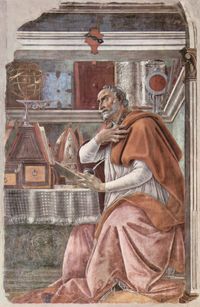
St. Augustine (by Sandro Botticelli)

St. Ignatius Loyola (by Francisco Zurbaran)

Benjamin Rush (by Charles Willson Peale)

Patrick Henry at the Virginia House of Burgesses (by Henry Rothermel)

Edmund Burke (by Sir Joshua Reynolds)

Samuel Adams (by John Singleton Copley)

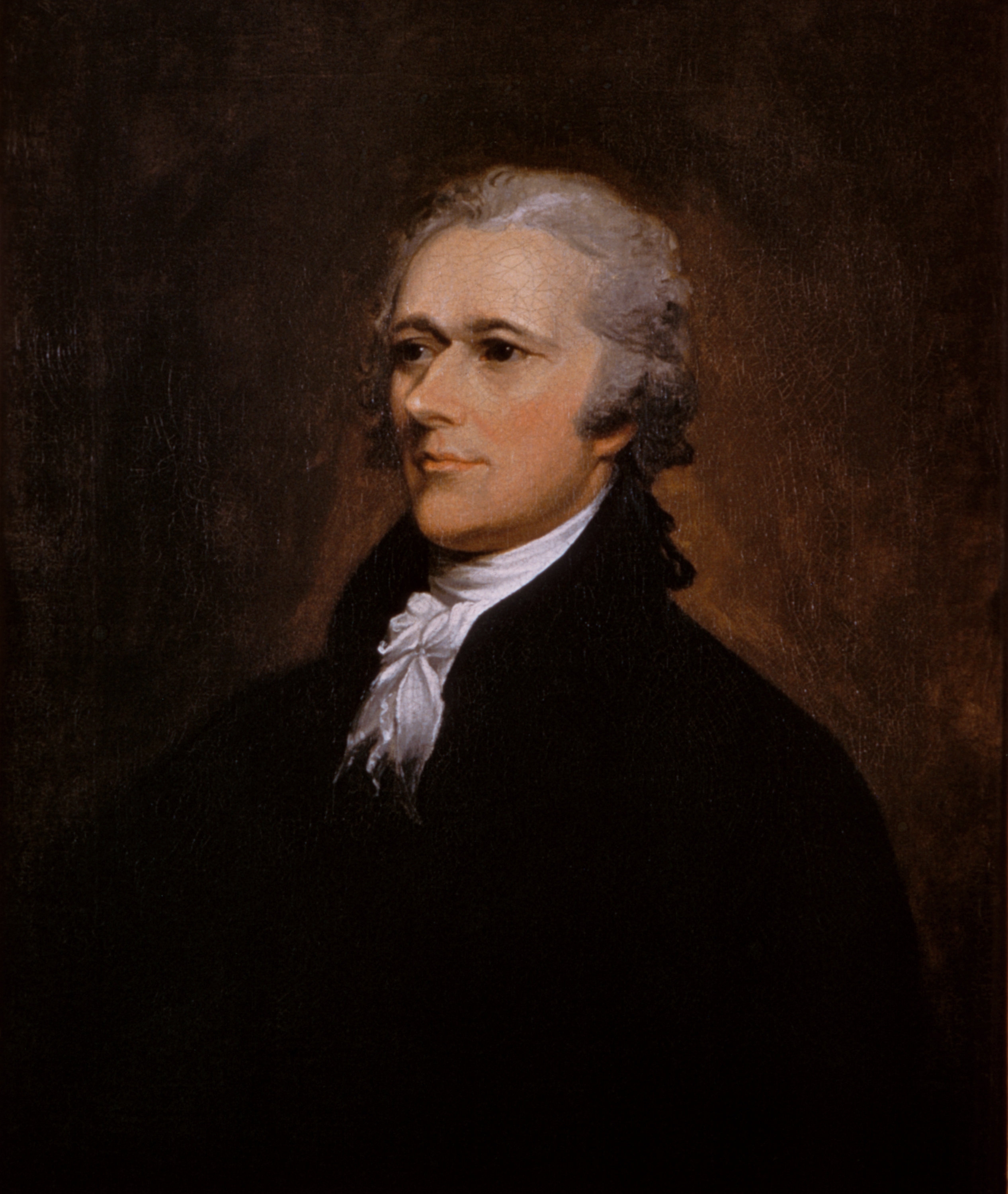
Alexander Hamilton (by John Trumbull)