Showing posts with label america. Show all posts

Sunday, August 14, 2011

Quote #142: Natural law and the nature of government

"Good and wise men, in all ages [...] have supposed that the Deity, from the relations we stand in to Himself and to each other, has constituted an eternal and immutable law, which is indispensably obligatory upon all mankind, prior to any human institution whatever.This is what is called the law of nature, “which, being coeval with mankind, and dictated by God himself, is, of course, superior in obligations to any other. It is binding over all the globe, in all countries, and at all times. No human laws are of any validity, if contrary to this; and such of them as are valid derive all their authority, mediately or immediately, from this original.”—Blackstone.

Upon this law depend the natural rights of mankind: the Supreme Being gave existence to man, together with the means of preserving and beautifying that existence. He endowed him with rational faculties, by the help of which to discern and pursue such things as were consistent with his duty and interest; and invested him with an inviolable right to personal liberty and personal safety.
Hence, in a state of nature, no man had any moral power to deprive another of his life, limbs, property, or liberty; nor the least authority to command or exact obedience from him, except that which arose from the ties of consanguinity.

Hence, also, the origin of all civil government, justly established, must be a voluntary compact between the rulers and the ruled, and must be liable to such limitations as are necessary for the security of the absolute rights of the latter; for what original title can any man, or set of men, have to govern others, except their own consent? To usurp dominion over a people in their own despite, or to grasp at a more extensive power than they are willing to intrust, is to violate that law of nature which gives every man a right to his personal liberty, and can therefore confer no obligation to obedience.
“The principal aim of society is to protect individuals in the enjoyment of those absolute rights which were vested in them by the immutable laws of nature, but which could not be preserved in peace without that mutual assistance and intercourse which is gained by the institution of friendly and social communities. Hence it follows, that the first and primary end of human laws is to maintain and regulate these absolute rights of individuals.”—Blackstone."

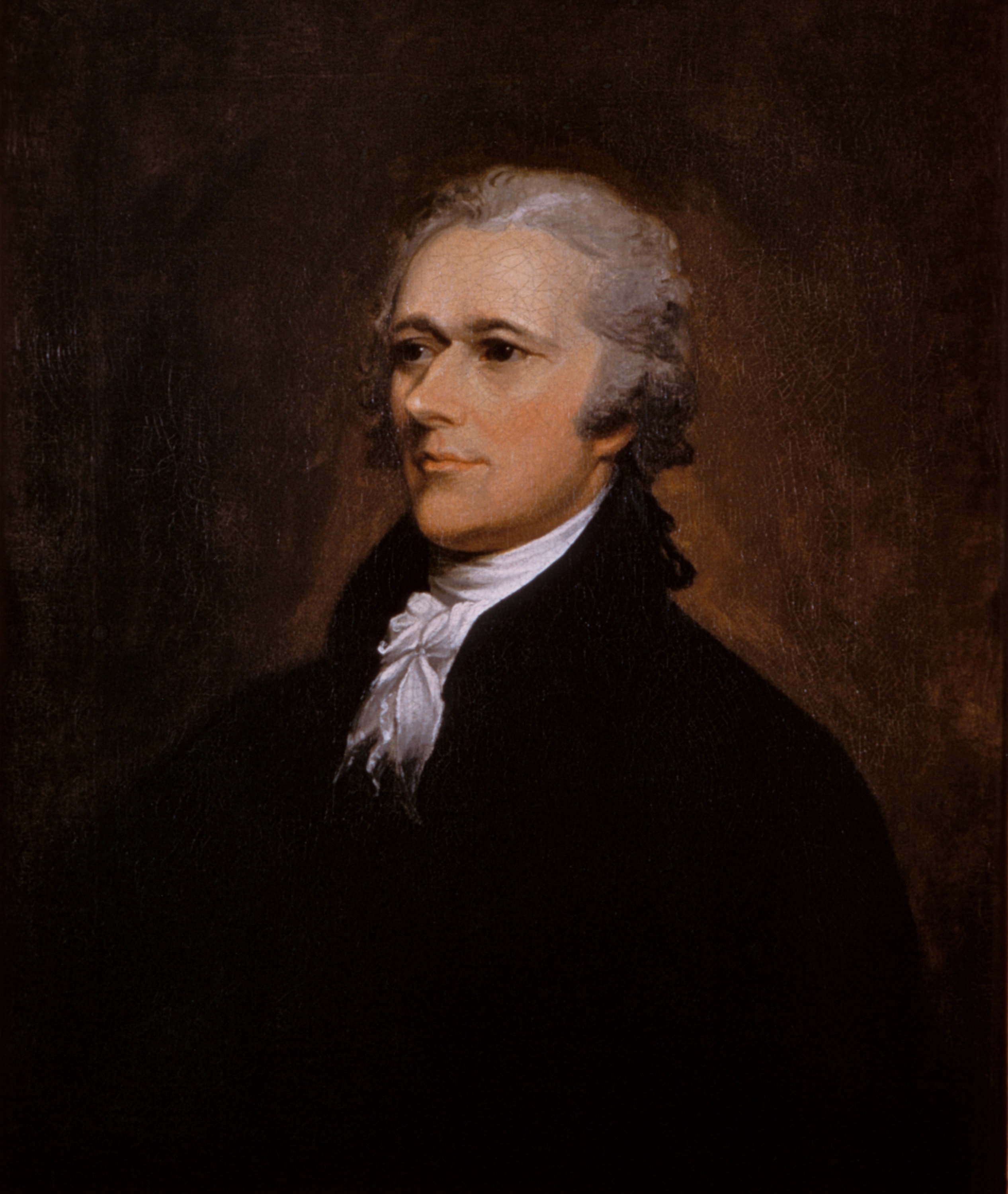
- Alexander Hamilton (1755-1804), American founding father, The Farmer Refuted (1775).

Sunday, June 5, 2011

Quote #140: dissenting religion and the push for American Independence

From the great English statesman Edmund Burke (1729-1797) comes this analysis of the role that dissenting religion played in the American commitment to liberty at the time leading up to our Revolution:

Religion, always a principle of energy, in this new people is no way worn out or impaired; and their mode of professing it is also one main cause of this free spirit. The people are Protestants; and of that kind which is the most adverse to all implicit submission of mind and opinion. This is a persuasion not only favourable to liberty, but built upon it. I do not think, Sir, that the reason of this averseness in the dissenting churches, from all that looks like absolute government, is so much to be sought in their religious tenets, as in their history. Every one knows that the Roman Catholic religion is at least coeval with most of the governments where it prevails; that it has generally gone hand in hand with them, and received great favour and every kind of support from authority. The Church of England too was formed from her cradle under the nursing care of regular government. But the dissenting interests have sprung up in direct opposition to all the ordinary powers of the world; and could justify that opposition only on a strong claim to natural liberty. Their very existence depended on the powerful and unremitted assertion of that claim. All Protestantism, even the most cold and passive, is a sort of dissent. But the religion most prevalent in our northern colonies is a refinement on the principle of resistance; it is the dissidence of dissent, and the Protestantism of the Protestant religion. This religion, under a variety of denominations agreeing in nothing but in the communion of the spirit of liberty, is predominant in most of the northern provinces; where the Church of England, notwithstanding its legal rights, is in reality no more than a sort of private sect, not composing most probably the tenth of the people. The colonists left England when this spirit was high, and in the emigrants was the highest of all; and even that stream of foreigners, which has been constantly flowing into these colonies, has, for the greatest part, been composed of dissenters from the establishments of their several countries, and have brought with them a temper and character far from alien to that of the people with whom they mixed.
- Speech on Conciliation with the Colonies, March 22, 1775.

Sunday, November 21, 2010

Quote #130: on the link between faith and works

"In one thing we agree that he who feareth God, and worketh righteousness shall be accepted of him and his Faith cannot be wrong whose life is in the right."

- Abigail Adams (1744-1818), American founder, Letter to Catherine Adams, April 15, 1818, quoted in The Founders on Religion:  A Book of Quotations, edited by James H. Hutson (Princeton:  2005), pg. 90.

Monday, September 6, 2010

CXX


"Of all tyrannies a tyranny sincerely exercised for the good of its victims may be the most oppressive. It may be better to live under robber barons than omnipotent moral busybodies. The robber baron's cruelty may sometimes sleep, his cupidity may at some point be satiated; but those who torment us for our own good will torment us without end, for they do so with the approval of their own conscience."

-C. S. Lewis

Saturday, March 20, 2010

Quote CV


"True law is right reason in agreement with nature; it is of universal application, unchanging and everlasting; it summons to duty by its commands and averts from wrongdoing by its prohibitions."

-Marcus Tullius Cicero (106 B.C.-43 B.C.)

Thursday, March 11, 2010

Quote No. 101


"It does not require a majority to prevail, but rather an irate, tireless minority keen to set brush fires in people's minds."


-Samuel Adams (1722-1803)

Monday, September 7, 2009

Quote #52


"The American Republic will endure until the day congress discovers that it can bribe the public with the public's money."


-Alexis de Toucqueville (1805-1859) from Democracy in America (Vol.II)

Sunday, September 6, 2009

Quote #50


Here it is. The Fiftieth Quote. I thought this one was an appropriate reminder of what we still have in America despite everything that is going wrong today.

"Republic. I like the sound of the word. It means people can live free, talk free, go or come, buy or sell, be drunk or sober, however they choose. Some words give you a feeling. Republic is one of those words that makes me tight in the throat - the same tightness a man gets when his baby takes his first step or his first baby shaves and makes his first sound as a man. Some words can give you a feeling that makes your heart warm. Republic is one of those words."

-John Wayne as Davy Crockett in The Alamo (1960)

Friday, September 4, 2009

Quote XLII


"History will never accept difficulties as an excuse."


-John F. Kennedy (1917-1963)

Sunday, May 31, 2009

Quote #41

"Our natural, inalienable rights are now considered to be a dispensation from government, and freedom has never been so fragile, so close to slipping from our grasp as it is at this moment." -- Ronald Reagan.

Wednesday, April 8, 2009

Quote #39

"In order to advance a principle of freedom, and in order not to threaten the religious establishments of the several states, the founders did a historically unprecedented thing. In the first provision of the First Amendment, they declared that the national government abdicated control of religious brlief and practice. To be sure, this was a matter of practical politics as well as principle. Given the competing Protestant denominations of the time, it was unthinkable that the founders would establish one as the national religion. But practical politics can also be in the service of principle." -- Richard John Neuhaus, American Babylon, pg. 39.

Saturday, March 28, 2009

Quote #35

Such being the impressions under which I have, in obedience to the public summons, repaired to the present station, it would be peculiarly improper to omit in this first official act my fervent supplications to that Almighty Being who rules over the universe, who presides in the councils of nations, and whose providential aids can supply every human defect, that His benediction may consecrate to the liberties and happiness of the people of the United States a Government instituted by themselves for these essential purposes, and may enable every instrument employed in its administration to execute with success the functions allotted to his charge. In tendering this homage to the Great Author of every public and private good, I assure myself that it expresses your sentiments not less than my own, nor those of my fellow-citizens at large less than either. No people can be bound to acknowledge and adore the Invisible Hand which conducts the affairs of men more than those of the United States. Every step by which they have advanced to the character of an independent nation seems to have been distinguished by some token of providential agency; and in the important revolution just accomplished in the system of their united government the tranquil deliberations and voluntary consent of so many distinct communities from which the event has resulted can not be compared with the means by which most governments have been established without some return of pious gratitude, along with an humble anticipation of the future blessings which the past seem to presage. These reflections, arising out of the present crisis, have forced themselves too strongly on my mind to be suppressed. You will join with me, I trust, in thinking that there are none under the influence of which the proceedings of a new and free government can more auspiciously commence.
--President George Washington, First Inaugural Address (1789).

Friday, February 6, 2009

Quote #XXXI

"Facts are stubborn things; and whatever may be our wishes, our inclinations, or the dictates of our passion, they cannot alter the state of facts and evidence." -- John Adams, American founding father and second president of the United States.

Tuesday, December 30, 2008

Quote XXIX

“Liberty without virtue would be no blessing to us.” -- Benjamin Rush, American Founding Father.

Friday, December 19, 2008

Quote XXVIII

"But remember, when the people once part with power, they can seldom or never resume it but by force. Many instances can be produced in which the people have voluntarily increased the powers of their rulers; but few, if any, in which rulers have willingly abridged their authority. This is a sufficient reason to induce you to be careful, in the first instance, how you deposit the powers of government."
-Robert Yates, "Essays of Brutus," printed in the New York Journal, October 1787 - April 1788.

Monday, October 6, 2008

Quote No. XXIV

"You're not to be so blind with patriotism that you can't face reality. Wrong is wrong, no matter who does it or says it." -- Malcolm X

Tuesday, September 30, 2008

Quote XXII

I see in the near future a crisis approaching that unnerves me and causes me to tremble for the safety of my country. . . . Corporations have been enthroned, an era of corruption in high places will follow, and the money-power of the country will endeavor to prolong its reign by working upon the prejudices of the people until the wealth is aggregated in a few hands and the Republic is destroyed.

-Abraham Lincoln (1809-1865)

Monday, September 15, 2008

Quote No. XVIII


I die the king's faithful servant, but God's first!


-Saint Thomas More

Quote No. XVII

One of the greatest problems of our time is that many are schooled but few are educated.

-Saint Thomas More

Sunday, September 7, 2008

Quote No. XIV


Freedom is a fragile thing and is never more than one generation away from extinction. It is not ours by inheritance; it must be fought for and defended constantly by each generation, for it comes only once to a people. Those who have known freedom, and then lost it, have never known it again.


-Ronald Reagan (1911-2004)

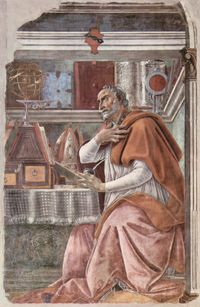
St. Augustine (by Sandro Botticelli)

St. Ignatius Loyola (by Francisco Zurbaran)

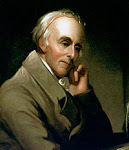
Benjamin Rush (by Charles Willson Peale)

Patrick Henry at the Virginia House of Burgesses (by Henry Rothermel)

Edmund Burke (by Sir Joshua Reynolds)

Samuel Adams (by John Singleton Copley)

Alexander Hamilton (by John Trumbull)