Showing posts with label literature. Show all posts

Sunday, April 11, 2010

Why do we quote?

A good question.  What is it about quotations that captivate those of us who like them?  I have books of quotations -- by the Founding Fathers, by Abraham Lincoln, by various theological authors, etc.  Why?  What is it about the words of others that is so appealing?  Partly it is authority -- the use of words by notable authors to support my own contentions.  It allows me to speak without using my own voice.  But that, I think, isn't the main reason.  The main reason is joy in the phrasing and wisdom of others.  What I like about quotations is the ability to reference a particularly well-put point or insight, and to share that literary or verbal excellence with others.  That to me is why quotations are so interesting.

As Lincoln once quipped, "For those who like that kind of thing, it's the kind of thing they like." 

Wednesday, March 17, 2010

Quote CIV


"A little philosophy inclineth a man's mind to atheism, but depth in philosophy bringeth men's minds about to religion."


-Sir Francis Bacon

Thursday, December 24, 2009

Quote #89: "Love Came Down at Christmas"

Love came down at Christmas,
Love all lovely, Love Divine;
Love was born at Christmas,
Star and Angels gave the sign.

Worship we the Godhead,
Love Incarnate, Love Divine;
Worship we our Jesus:
But wherewith for sacred sign?

Love shall be our token,
Love shall be yours and love be mine,
Love to God and all men,
Love for plea and gift and sign.
 - Christina Rossetti (1830-1894), English poet.

Tuesday, September 29, 2009

Quote LXXI: On Education, The Consumation Of

"The start of learning, thus, lies in reading, but its consummation lies in meditation."

Hugh of St. Victor

Monday, September 15, 2008

Quote No. XVII

One of the greatest problems of our time is that many are schooled but few are educated.

-Saint Thomas More

Saturday, August 30, 2008

Quote No. V


Fairy tales do not tell children that dragons exist. Children already know that dragons exist. Fairy tales tell children that dragons can be killed.


-G. K. Chesterton (1874-1936)

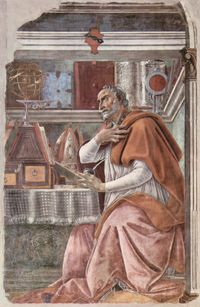
St. Augustine (by Sandro Botticelli)

St. Ignatius Loyola (by Francisco Zurbaran)

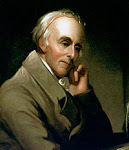
Benjamin Rush (by Charles Willson Peale)

Patrick Henry at the Virginia House of Burgesses (by Henry Rothermel)

Edmund Burke (by Sir Joshua Reynolds)

Samuel Adams (by John Singleton Copley)

Alexander Hamilton (by John Trumbull)