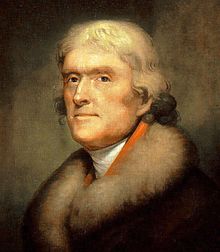
- Second Inaugural Address, March 4, 1805.

 Posts
All Comments
Posts
All Comments



Religion, always a principle of energy, in this new people is no way worn out or impaired; and their mode of professing it is also one main cause of this free spirit. The people are Protestants; and of that kind which is the most adverse to all implicit submission of mind and opinion. This is a persuasion not only favourable to liberty, but built upon it. I do not think, Sir, that the reason of this averseness in the dissenting churches, from all that looks like absolute government, is so much to be sought in their religious tenets, as in their history. Every one knows that the Roman Catholic religion is at least coeval with most of the governments where it prevails; that it has generally gone hand in hand with them, and received great favour and every kind of support from authority. The Church of England too was formed from her cradle under the nursing care of regular government. But the dissenting interests have sprung up in direct opposition to all the ordinary powers of the world; and could justify that opposition only on a strong claim to natural liberty. Their very existence depended on the powerful and unremitted assertion of that claim. All Protestantism, even the most cold and passive, is a sort of dissent. But the religion most prevalent in our northern colonies is a refinement on the principle of resistance; it is the dissidence of dissent, and the Protestantism of the Protestant religion. This religion, under a variety of denominations agreeing in nothing but in the communion of the spirit of liberty, is predominant in most of the northern provinces; where the Church of England, notwithstanding its legal rights, is in reality no more than a sort of private sect, not composing most probably the tenth of the people. The colonists left England when this spirit was high, and in the emigrants was the highest of all; and even that stream of foreigners, which has been constantly flowing into these colonies, has, for the greatest part, been composed of dissenters from the establishments of their several countries, and have brought with them a temper and character far from alien to that of the people with whom they mixed.- Speech on Conciliation with the Colonies, March 22, 1775.
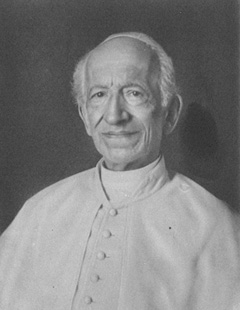
For it was a mark of a Christian solider to combine the greatest fortitude with the greatest attention to military discipline, and to add to nobility of mind immovable fidelity towards his prince. But, if anything dishonorable was required of him, as, for instance, to break the law of God, or to turn his sword against innocent disciples of christ, then, indeed, he refused to execute the orders, yet in such wise that he would rather retire from the army and die for his religion than oppose the public authority by means of sedition and tumult.- Pope Leo XIII, Encyclical Letter Diuturnum (On Civil Government) (1881), chapter 20.


If we appreciate the force of powerful emotions aroused by the Temple cult, we may understand how grand a revolution was effected in the simple declaration, so long in coming, that with the destruction of the Temple the realm of the sacred had finally overspread the world. We must now see in ourselves, in our selfish motives to be immolated, the noblest sacrifice of all. So Rabban Gamaliel son of Rabbi Judah the Patriarch said, "Do His will as if it was your will, so that He may do your will as if it ws His will. Make your will of no effect before His will, that He may make the will of others of no effect before your will." His will is that we love our neighbors as ourselves. Just was willingly as we would contribute bricks and mortar for the building of a sanctuary, so willingly we ought to contribute love, renunciation, self-sacrifice, for the building of a sacred community. If one wants to do something for God in a time when the Temple is no more, the offering must be the gift of selfless compassion. The holy altar must be the streets and marketplaces of the world.- Jacob Neuser, Judaism in the Beginning of Christianity (Fortress Press: 1984), pgs. 98-99.
Love justice, you rulers of the earth; set your mind upon the Lord in the right way, and seek him in singleness of heart; for he is to be found by those who trust him without question, and he makes himself known to those who never doubt him. Dishonest thinking cuts people off from God, and if fools like liberties with his power he shows them up for what they are. Wisdom will not enter a shifty soul, nor make her home in a body that is mortgaged to sin. This holy spirit of discipline will shun falsehood; she cannot stay in the presence of unreason, and will withdraw at the approach of injustice.- Wisdom of Solomon 1.1-5 (circa 2nd century B.C.) (Revised English Bible translation).
A Christian in an enemy to no one, much less to the emperor; he knows the emperor was raised up by God; therefore, a Christian honors him, reveres him, favors him, and hope for his preservation along with all the empire as long as the world lasts. In fact, the world will last only as long as the empire. We honor the emperor to the degree permitted to us and necessary for him, as a man who is second only to God, who is protected by God, and who is therefore inferior only to God.- Tertullian (160-220 A.D.), early Christian apologist, Ad Scapulaum 2.

Such being the impressions under which I have, in obedience to the public summons, repaired to the present station, it would be peculiarly improper to omit in this first official act my fervent supplications to that Almighty Being who rules over the universe, who presides in the councils of nations, and whose providential aids can supply every human defect, that His benediction may consecrate to the liberties and happiness of the people of the United States a Government instituted by themselves for these essential purposes, and may enable every instrument employed in its administration to execute with success the functions allotted to his charge. In tendering this homage to the Great Author of every public and private good, I assure myself that it expresses your sentiments not less than my own, nor those of my fellow-citizens at large less than either. No people can be bound to acknowledge and adore the Invisible Hand which conducts the affairs of men more than those of the United States. Every step by which they have advanced to the character of an independent nation seems to have been distinguished by some token of providential agency; and in the important revolution just accomplished in the system of their united government the tranquil deliberations and voluntary consent of so many distinct communities from which the event has resulted can not be compared with the means by which most governments have been established without some return of pious gratitude, along with an humble anticipation of the future blessings which the past seem to presage. These reflections, arising out of the present crisis, have forced themselves too strongly on my mind to be suppressed. You will join with me, I trust, in thinking that there are none under the influence of which the proceedings of a new and free government can more auspiciously commence.--President George Washington, First Inaugural Address (1789).
 "Facts are stubborn things; and whatever may be our wishes, our inclinations, or the dictates of our passion, they cannot alter the state of facts and evidence." -- John Adams, American founding father and second president of the United States.