Dueling and the Christian Nation Issue
2 months ago

 Posts
All Comments
Posts
All Comments


Well aware that the opinions and belief of men depend not on their own will, but follow involuntarily the evidence proposed to their minds; that Almighty God hath created the mind free, and manifested his supreme will that free it shall remain by making it altogether insusceptible of restraint; that all attempts to influence it by temporal punishments, or burthens, or by civil incapacitations, tend only to beget habits of hypocrisy and meanness, and are a departure from the plan of the holy author of our religion, who being lord both of body and mind, yet chose not to propagate it by coercions on either, as was in his Almighty power to do, but to extend it by its influence on reason alone[.]-- The Virginia Act for Establishing Religious Freedom (1786).
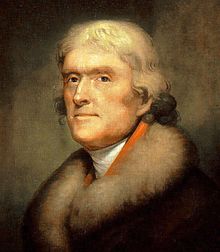

There is no question here respecting forms of government, for there is no reason why the Church should not approve of the chief power being held by one man or by more, provided only it be just, and that it tend to the common advantage. Wherefore, so long as justice be respected, the people are not hindered from choosing for themselves that form of government which suits best either their own disposition, or the institutions and customs of their ancestors.
But as regards political power, the Church rightly teaches that it comes from God, for it finds this clearly testified in the Sacred Scriptures and in the monuments of antiquity; besides, no other doctrine can be conceived which is more agreeable to reason or more in accord with the safety of both princes and peoples.- Diuturnum (On Civil Government), paragraphs 7 & 8 (1881).
Happy is the husband of a good wife; the number of his days will be doubled. A loyal wife rejoices her husband, and he will complete his years in peace. A good wife is a great blessing; she will be granted among the blessings of the man who fears the Lord. Whether rich or poor, his heart is glad, and at all times his face is cheerful.- Sirach 26:1-4 (Revised Standard Version, Second Catholic Edition).

[O]n the eighteen century. It certainly witnessed the sciences and arts, manners and morals, advanced to a higher degree than the world had ever before seen. And might we not go back to the ear of the Borgias, by which time the barbarous ages had reduced national morality to its lowest point of depravity, and observe that the arts and sciences, rising from that point, advanced gradually through all the sixteenth, seventeenth and eighteen centuries, softening and correcting the manners and morals of man? I think, too, we may add to the great honor for science and the arts, that their natural effect is, by illuminating public opinion, to erect it into a sensor, before which the most exalted tremble for their future, as well as present fame.- Thomas Jefferson, Letter to John Adams dated January 11, 1816, taken from In God We Trust: The Religious Beliefs and Ideas of the American Founding Fathers, ed. by Norman Cousins (Harper & Bros.: 1958), pg. 266.
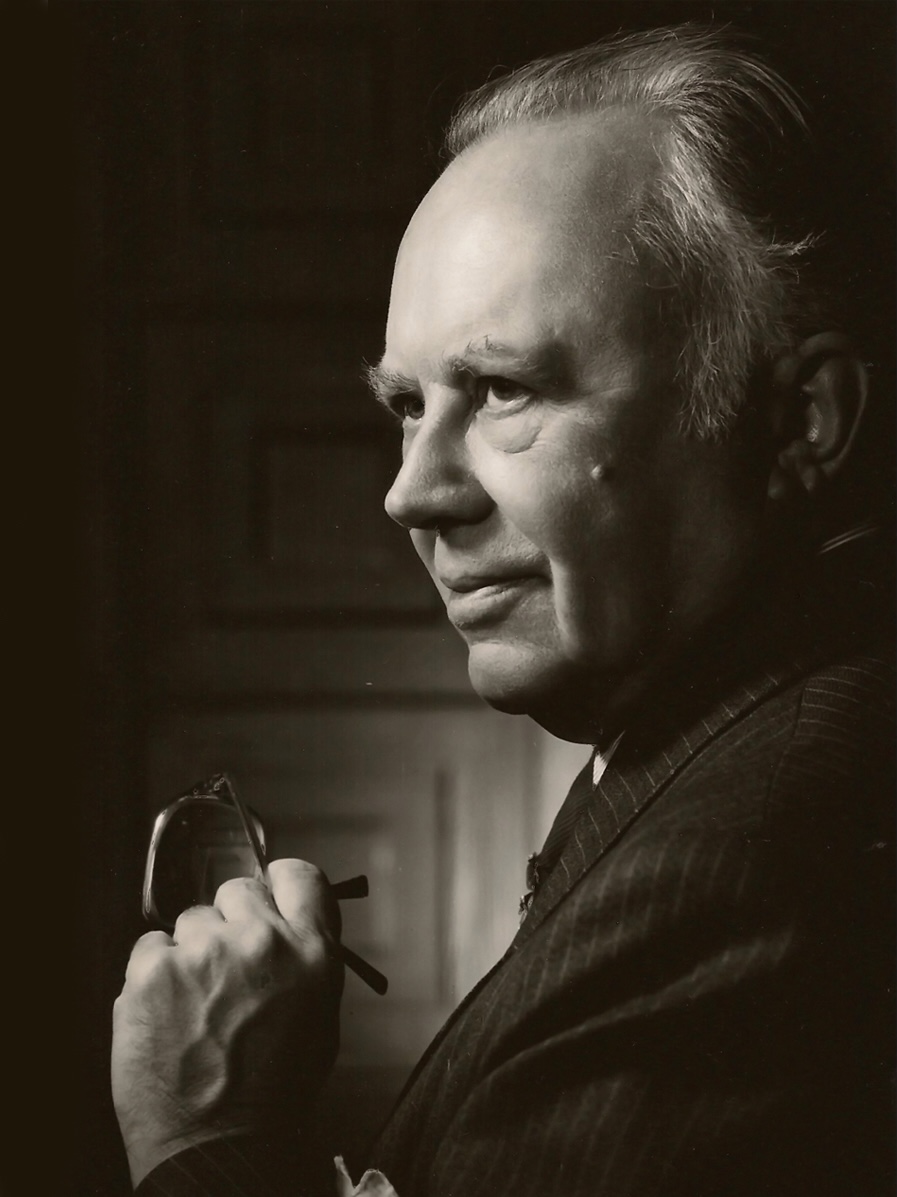
It is a good idea to avoid long quotations, especially quotations long enough to require indentation. Tehe are few such quotations in academic writing that could not better be paraphrased. Long quotations not only discourage the reader, they often serve as a substitute for thought on the part of the writer.- Christopher Lasch (1932-1934), Plain Style: A Guide to Written English (University of Pennsylvania Press: 2002), pg. 65.

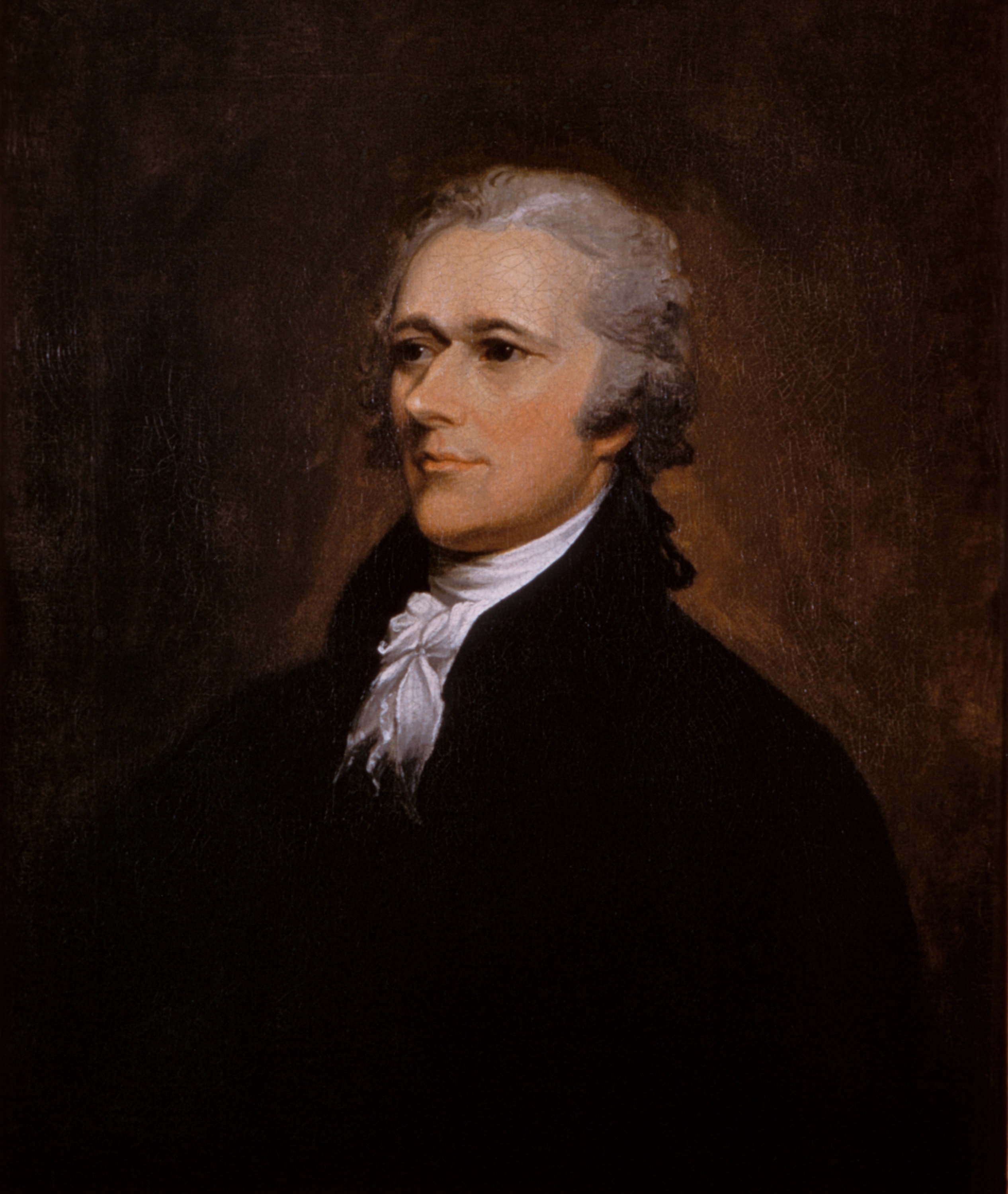 "Good and wise men, in all ages [...] have supposed that the Deity, from the relations we stand in to Himself and to each other, has constituted an eternal and immutable law, which is indispensably obligatory upon all mankind, prior to any human institution whatever.This is what is called the law of nature, “which, being coeval with mankind, and dictated by God himself, is, of course, superior in obligations to any other. It is binding over all the globe, in all countries, and at all times. No human laws are of any validity, if contrary to this; and such of them as are valid derive all their authority, mediately or immediately, from this original.”—Blackstone.
For I speak to you Gentiles, inasmuch as I am the apostle of the Gentiles, I magnify mine office:Wise words to ponder.
If by any means I may provoke to emulation [them which are] my flesh, and might save some of them.
For if the casting away of them [be] the reconciling of the world, what [shall] the receiving [of them be], but life from the dead?
For the gifts and calling of God [are] without repentance.
For as ye in times past have not believed God, yet have now obtained mercy through their unbelief:
Even so have these also now not believed, that through your mercy they also may obtain mercy.
For God hath concluded them all in unbelief, that he might have mercy upon all.

Religion, always a principle of energy, in this new people is no way worn out or impaired; and their mode of professing it is also one main cause of this free spirit. The people are Protestants; and of that kind which is the most adverse to all implicit submission of mind and opinion. This is a persuasion not only favourable to liberty, but built upon it. I do not think, Sir, that the reason of this averseness in the dissenting churches, from all that looks like absolute government, is so much to be sought in their religious tenets, as in their history. Every one knows that the Roman Catholic religion is at least coeval with most of the governments where it prevails; that it has generally gone hand in hand with them, and received great favour and every kind of support from authority. The Church of England too was formed from her cradle under the nursing care of regular government. But the dissenting interests have sprung up in direct opposition to all the ordinary powers of the world; and could justify that opposition only on a strong claim to natural liberty. Their very existence depended on the powerful and unremitted assertion of that claim. All Protestantism, even the most cold and passive, is a sort of dissent. But the religion most prevalent in our northern colonies is a refinement on the principle of resistance; it is the dissidence of dissent, and the Protestantism of the Protestant religion. This religion, under a variety of denominations agreeing in nothing but in the communion of the spirit of liberty, is predominant in most of the northern provinces; where the Church of England, notwithstanding its legal rights, is in reality no more than a sort of private sect, not composing most probably the tenth of the people. The colonists left England when this spirit was high, and in the emigrants was the highest of all; and even that stream of foreigners, which has been constantly flowing into these colonies, has, for the greatest part, been composed of dissenters from the establishments of their several countries, and have brought with them a temper and character far from alien to that of the people with whom they mixed.- Speech on Conciliation with the Colonies, March 22, 1775.