Showing posts with label socialism. Show all posts

Monday, September 6, 2010

CXX


"Of all tyrannies a tyranny sincerely exercised for the good of its victims may be the most oppressive. It may be better to live under robber barons than omnipotent moral busybodies. The robber baron's cruelty may sometimes sleep, his cupidity may at some point be satiated; but those who torment us for our own good will torment us without end, for they do so with the approval of their own conscience."

-C. S. Lewis

Thursday, September 10, 2009

Quote LX


"People who have what they want are fond of telling people who haven't what they want that they really don't want it."


-Ogden Nash (1902-1971)

Saturday, September 5, 2009

Quote XLV


"Anyone who can appease a man's conscience can take his freedom away from him."


-The Cigarette Smoking Man (X-Files)

Friday, September 4, 2009

Quote XLII


"History will never accept difficulties as an excuse."


-John F. Kennedy (1917-1963)

Sunday, May 31, 2009

Quote #41

"Our natural, inalienable rights are now considered to be a dispensation from government, and freedom has never been so fragile, so close to slipping from our grasp as it is at this moment." -- Ronald Reagan.

Saturday, May 2, 2009

Quote #40

"A government big enough to give you everything you want is big enough to take away everything you have." -- President Gerald Ford.

Monday, March 30, 2009

Quote #36

"If democracy, in essence, means the abolition of class domination, then why should not a socialist minister charm the whole bourgeois world by orations on class collaboration?" -- Vladimir Lenin, What Is To Be Done? (1901).

Friday, February 6, 2009

Quote #XXX

"All your schemes of an equal division of property, and for keeping all the members of a community equal in their condition, are fallacious, and, if they could be carried out, would end only in establishing universal poverty, universal ignorance, and universal barbarism." -- Orestes Brownson.

Friday, December 19, 2008

Quote XXVIII

"But remember, when the people once part with power, they can seldom or never resume it but by force. Many instances can be produced in which the people have voluntarily increased the powers of their rulers; but few, if any, in which rulers have willingly abridged their authority. This is a sufficient reason to induce you to be careful, in the first instance, how you deposit the powers of government."
-Robert Yates, "Essays of Brutus," printed in the New York Journal, October 1787 - April 1788.

Tuesday, September 30, 2008

Quote XXII

I see in the near future a crisis approaching that unnerves me and causes me to tremble for the safety of my country. . . . Corporations have been enthroned, an era of corruption in high places will follow, and the money-power of the country will endeavor to prolong its reign by working upon the prejudices of the people until the wealth is aggregated in a few hands and the Republic is destroyed.

-Abraham Lincoln (1809-1865)

Monday, September 15, 2008

Quote No. XVII

One of the greatest problems of our time is that many are schooled but few are educated.

-Saint Thomas More

Sunday, September 7, 2008

Quote No. XIV


Freedom is a fragile thing and is never more than one generation away from extinction. It is not ours by inheritance; it must be fought for and defended constantly by each generation, for it comes only once to a people. Those who have known freedom, and then lost it, have never known it again.


-Ronald Reagan (1911-2004)

Monday, September 1, 2008

Quote No. IX


The Roman Republic fell, not because of the ambition of Caesar or Augustus, but because it had already long ceased to be in any real sense a republic at all. When the sturdy Roman plebeian, who lived by his own labor, who voted without reward according to his own convictions, and who with his fellows formed in war the terrible Roman legion, had been changed into an idle creature who craved nothing in life save the gratification of a thirst for vapid excitement, who was fed by the state, and who directly or indirectly sold his vote to the highest bidder, then the end of the republic was at hand, and nothing could save it. The laws were the same as they had been, but the people behind the laws had changed, and so the laws counted for nothing.
-Theodore Roosevelt (1858-1919)

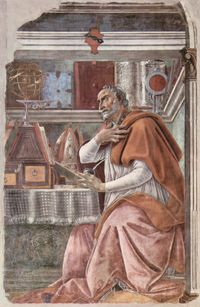
St. Augustine (by Sandro Botticelli)

St. Ignatius Loyola (by Francisco Zurbaran)

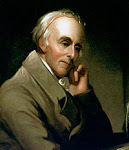
Benjamin Rush (by Charles Willson Peale)

Patrick Henry at the Virginia House of Burgesses (by Henry Rothermel)

Edmund Burke (by Sir Joshua Reynolds)

Samuel Adams (by John Singleton Copley)

Alexander Hamilton (by John Trumbull)